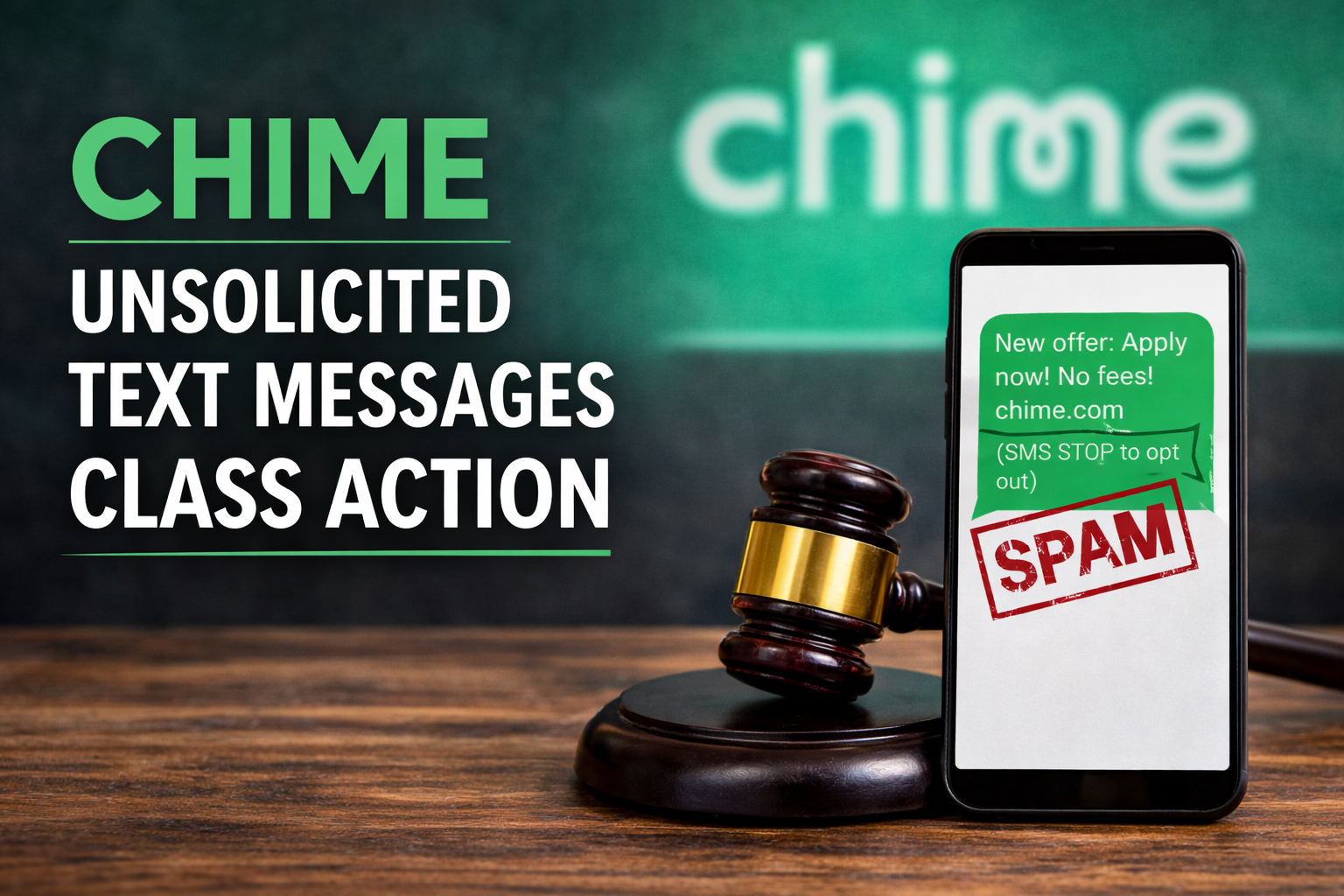
Imagine sitting on your couch when your phone buzzes. It’s a text from Chime, the popular fintech company, offering you a “limited-time bonus” or “account update.” The catch? You never signed up for these texts, and you aren’t even a Chime customer.
As we move through 2026, the buzz around a Chime unsolicited text messages class action is louder than ever. Thousands of people claim that Chime has been blasting out automated marketing texts without permission. If you’ve received a “ping” from Chime that you didn’t ask for, you might be part of a growing group of consumers who are tired of digital trespassing.
Who is Behind the Lawsuit Against Chime?
The “Who” in this story consists of two main groups: the frustrated recipients and the consumer protection lawyers. The lead plaintiffs in these types of cases are typically regular individuals who received repeated text messages despite having no prior relationship with Chime.
On the legal side, firms specializing in the Telephone Consumer Protection Act (TCPA) are the ones leading the charge. These lawyers look for patterns where a company uses an “autodialer” to send thousands of texts at once. In 2026, firms are actively vetting “class members”—people who received these texts—to prove that Chime’s marketing department went too far.
Why Chime is Facing Heat for Texting
The “Why” boils down to one word: Consent. Under federal law, companies cannot send you automated marketing texts unless you have given them “prior express written consent.
According to various consumer reports and initial legal filings, Chime allegedly:
-
Texted Non-Customers: Sending “invite” or “signup” links to people who never visited their website.
-
Ignored “STOP” Requests: Continuing to send messages even after the recipient replied “STOP” to opt out.
-
Purchased Lead Lists: Using third-party databases to find phone numbers, which is a major red flag for TCPA compliance.
When a company sends an unsolicited text, it isn’t just an annoyance; it is a violation of privacy that can carry a penalty of $500 to $1,500 per message under the TCPA.
Where is the Legal Action Happening?
Most federal class actions against major fintech companies like Chime are filed in the U.S. District Court for the Northern District of California, as Chime is headquartered in San Francisco. However, because these texts cross state lines, “Where” also includes various state-level investigations.
Lawyers are currently gathering evidence from across the country. If you are in Texas, Florida, or New York, the “Where” is effectively your smartphone. Every unsolicited text you receive is a piece of evidence that can be used in a federal courtroom to show a nationwide pattern of behavior.
Understanding the TCPA: The Law Protecting Your Phone
To understand the Chime unsolicited text messages class action, you have to understand the Telephone Consumer Protection Act (TCPA). Passed in 1991 and updated for the smartphone era, this law makes it illegal for companies to use automated technology to contact you without permission.
In 2026, the courts are becoming even stricter. New rulings have clarified that even a single unsolicited text can be enough to sue. Chime’s defense usually rests on the idea that someone—perhaps a friend or a “lead generator”—gave them your number. But the law says the burden of proof is on Chime to show they had your permission.
Recent Settlements and What They Mean for You
While the “Text Message” specific case is evolving, Chime is no stranger to the settlement table. Looking at their history helps us see how they handle legal pressure:
| Case Type | Year | Settlement Amount | Key Issue |
| Service Outage | 2021 | $1.5 Million | Customers couldn’t access funds during a 2019 outage. |
| CFPB Refund Delay | 2024 | $4.55 Million | Illegally delaying refunds to thousands of customers. |
| TCPA Investigation | 2026 | Ongoing | Unsolicited marketing texts and autodialer usage. |
As the table shows, Chime has a history of settling when federal regulators or class-action lawyers bring enough evidence. This suggests that if the evidence for unsolicited texts is strong, a settlement could be on the horizon.
How to Identify a “Qualified” Unsolicited Text
Not every text from Chime is a violation. To know if your situation fits the Chime unsolicited text messages class action criteria, check for these signs:
-
No Relationship: You have never had a Chime account or signed up for their newsletter.
-
Automated Tone: The message looks like a template (e.g., “Hey! Join Chime today for a $50 bonus! [Link]”).
-
Short Code: The text comes from a 5- or 6-digit “short code” number rather than a standard 10-digit phone number.
-
Repeat Offenses: You receive multiple texts over weeks or months despite never engaging with them.
Conclusion
The surge in complaints regarding Chime’s texting habits has turned a minor annoyance into a major legal question. The Chime unsolicited text messages class action is a reminder that in 2026, your phone number is private property. Whether Chime was overzealous in its marketing or its automated systems hit a “glitch,” the law is clear about the need for consent.
If you are one of the many people receiving these “pings,” the best thing you can do is stay informed. Keep your screenshots, document the dates, and watch for official notices. While a giant check might not be in the mail tomorrow, the pressure on Chime to respect your digital space is only getting stronger.
Disclaimer
The information provided in this article is for educational and informational purposes only. I am a blogger sharing industry news and research; I am not a lawyer or a legal professional. This content does not constitute legal advice. If you are seeking to join a lawsuit or need specific legal guidance, please consult with a qualified attorney.