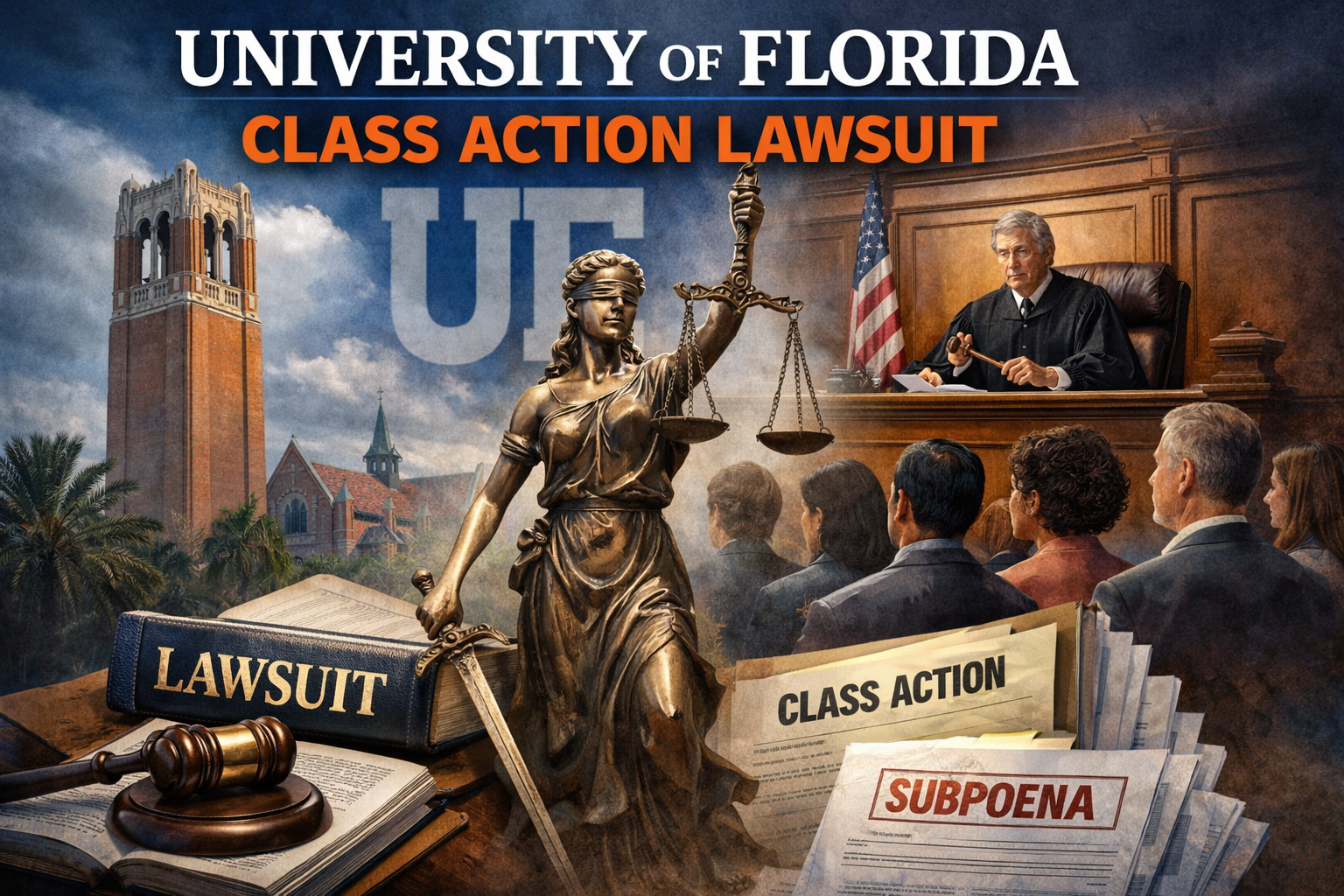
In recent years, the intersection of higher education and the legal system has become increasingly complex. One of the most significant developments for students and alumni in the Sunshine State is the University of Florida Class Action Lawsuit. This legal battle has navigated through various levels of the Florida court system, raising fundamental questions about the contractual relationship between a public university and its student body.
This article provides an in-depth look at the background, current status, and broader implications of this lawsuit, focusing on the facts of the case and the institutional dynamics at play.
Understanding the University of Florida
The University of Florida (UF) is a powerhouse of American higher education. As a top-ranked public land-grant research university located in Gainesville, it serves as the flagship institution of the State University System of Florida. With a student population exceeding 50,000 and an economic impact measured in the billions, UF is more than just a school; it is a central pillar of the state’s cultural and economic identity.
Because of its prominence, legal disputes involving UF often set a precedent for other public institutions. When a lawsuit reaches the scale of a “class action” against such a major entity, it naturally draws national attention from educators, legal scholars, and students alike.
What Is a Class Action Lawsuit?
Before diving into the specifics of the UF case, it is helpful to define the mechanism being used. A class action lawsuit is a legal proceeding in which one or more plaintiffs (the “class representatives”) sue on behalf of a larger group of people who have suffered similar injuries or financial losses.
In the context of a university, the “class” is often composed of thousands of students or alumni. The primary benefit of a class action is efficiency: rather than 50,000 individual students filing 50,000 separate lawsuits for relatively small amounts of money, the court handles them as a single collective case. If the plaintiffs win or reach a settlement, the recovery is distributed among all eligible class members.
Background of the University of Florida Class Action Lawsuit
The roots of the University of Florida Class Action Lawsuit trace back to the unprecedented disruptions of 2020. Like nearly every other institution in the world, UF was forced to suspend on-campus operations and transition to remote learning due to the global pandemic.
While the university continued to provide academic instruction online, students were still required to pay various mandatory fees costs separate from tuition that are intended to fund on-campus services. The lawsuit centers on the argument that since the campus was closed and services were unavailable, students should have been refunded the portion of their fees that funded those specific services.
The Legal Journey
The case has seen a significant “see-saw” effect in the Florida courts:
-
Trial Court: A circuit judge initially allowed the case to move forward, agreeing that the students had a plausible claim for breach of contract.
-
Appeals Court: The university successfully appealed, with the court ruling that “sovereign immunity” a legal doctrine that protects government entities from being sued barred the lawsuit.
-
Florida Supreme Court: In a landmark decision, the Florida Supreme Court eventually revived the lawsuit. The justices ruled that the university could not use sovereign immunity to escape a breach-of-contract claim if an express or implied contract existed through university documents.
Why Class Action Lawsuits Occur in Universities
The UF case is part of a broader trend of litigation in higher education. Universities are no longer viewed solely as ivory towers of learning; they are increasingly viewed through the lens of a service provider-consumer relationship. Common triggers for class actions include:
-
Tuition and Fee Disputes: Conflicts over whether a university delivered the specific “experience” (in-person labs, athletic facilities, health services) promised in exchange for fees.
-
Data Breaches: When a university’s digital infrastructure is compromised, potentially exposing the personal or financial data of thousands of students and faculty.
-
Civil Rights and Policy: Disputes regarding free speech or admissions policies often escalate into class actions when a policy is alleged to affect a specific demographic of the student body.
Key Concerns Raised by Students or Plaintiffs
The core of the University of Florida Class Action Lawsuit is not actually about the quality of the online classes. Instead, it focuses on the financial agreements students sign upon enrollment.
Plaintiffs argue that when they paid “Activity and Service Fees,” “Health Fees,” and “Transportation Fees,” they were entering a contract. Their concerns include:
-
Unused Services: Paying for a state-of-the-art gym or a campus bus system that was legally off-limits during the shutdown.
-
Financial Fairness: Many students faced economic uncertainty and felt that the university should return funds for services not rendered.
-
Transparency: A desire for clearer language in university contracts regarding what happens to student funds during “force majeure” (unforeseeable) events.
The University’s Response and Public Statements
The University of Florida, represented by its Board of Trustees, has maintained a consistent defense throughout the litigation. Generally, institutions in this position argue that:
-
Sovereign Immunity: As a state entity, the university is protected from certain types of lawsuits unless it explicitly waives that protection through a written contract.
-
Emergency Response: The shutdown was a necessary response to a health crisis, and the university acted to protect the safety of the student body.
-
Continued Value: UF argues that it continued to provide the core “product” an education leading to a degree despite the change in delivery method.
Similar Lawsuits Involving Other Universities
UF is far from alone in this struggle. Similar “COVID-era” fee lawsuits were filed against almost every major institution in Florida, including Florida State University (FSU) and the University of South Florida (USF).
While some of these cases were initially dismissed, the Florida Supreme Court’s rulings have acted as a “green light” for many of these stalled lawsuits to be reconsidered. Nationally, schools like Rutgers University and others settled similar fee disputes, providing a potential roadmap for how these cases might eventually conclude.
What This Situation Means for Students and Universities
The outcome of the University of Florida Class Action Lawsuit will likely reshape the future of enrollment agreements.
For Students: It highlights the importance of the “fine print.” The Financial Liability Agreement is a legal contract, and its terms dictate what a student is and isn’t entitled to during a crisis. For Universities: This case is a wake-up call to update policies. Many schools are now adding “pandemic clauses” or “service interruption” language to their handbooks to clarify that fees may not be refundable in the event of a campus closure.
The Role of Transparency and Communication in Universities
If there is one lesson to be learned from this litigation, it is the value of transparency. Much of the frustration driving these lawsuits stems from a perceived lack of communication regarding where student money goes.
When universities are transparent about their “fixed costs” such as paying the salaries of health clinic staff or maintaining empty buildings students may be more understanding of why refunds aren’t immediate. Conversely, when universities treat student fees as “non-negotiable” regardless of service delivery, it creates the friction that leads to class action filings.
Conclusion
The University of Florida Class Action Lawsuit remains one of the most significant legal tests for public higher education in the 21st century. While the courts have cleared major hurdles by allowing the case to proceed, the final chapter has yet to be written. Whether it ends in a court-ordered refund, a settlement, or a dismissal, the case has already succeeded in forcing a conversation about the rights of students and the responsibilities of the institutions they attend.
As this case continues to develop, it serves as a reminder of the evolving nature of the “college contract” in an unpredictable world.
Disclaimer: This article is provided for informational and educational purposes only. It does not constitute legal advice, nor does it provide instructions on how to join or file a lawsuit. If you believe you are a member of a class action or require legal assistance, please consult with a qualified attorney.