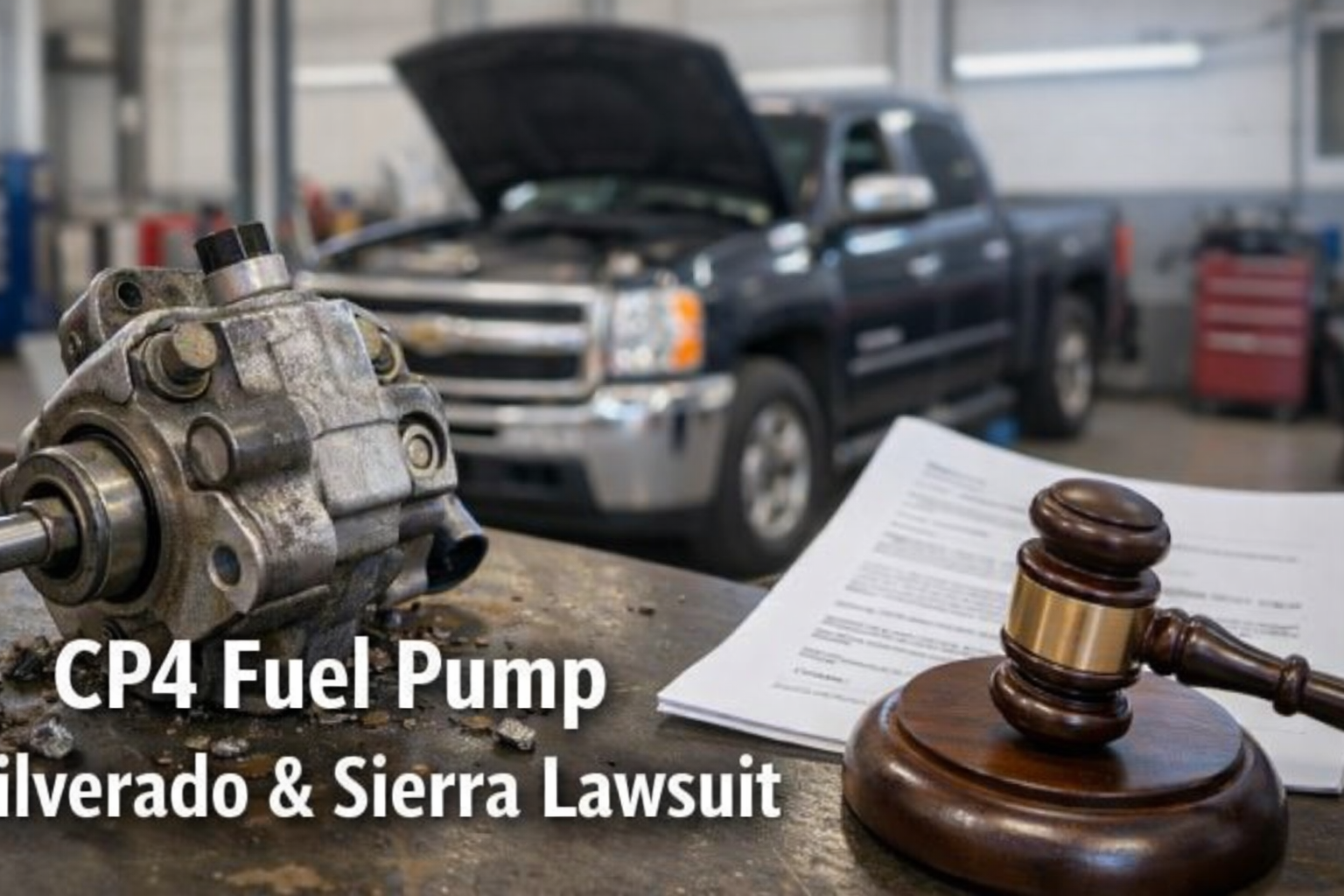
Chevrolet Silverado and GMC Sierra 2500/3500 series are pillars of the American heavy-duty truck market, prized for their towing capacity and Duramax diesel engines. However, for those owning models produced between 2011 and 2016, a specific technical concern has become a dominant topic: the CP4 fuel pump silverado sierra lawsuit. This situation represents a significant mechanical challenge for the 6.6L Duramax LML engine and serves as a cautionary tale in automotive engineering.
For the general public, understanding why this component fails and how to protect a vehicle is essential for maintaining the longevity of these powerful machines.
You have to read- Kash Patel Girlfriend Defamation Lawsuit
The Engineering Behind the Bosch CP4.2
When General Motors introduced the LML Duramax in 2011, it was a leap forward in emissions technology and fuel efficiency. To achieve these goals, GM transitioned from the older Bosch CP3 pump to the Bosch CP4.2.
The CP4 was designed to be lighter and more efficient, capable of reaching pressures up to 29,000 psi. While it succeeded on paper, its internal design introduced a vulnerability. Unlike the CP3, which used three pistons, the CP4 uses two pistons driven by a cam and roller-tappet assembly. Crucially, this assembly relies entirely on the diesel fuel itself for lubrication.
The North American Diesel Dilemma
The core technical conflict involves the chemistry of North American fuel. The Bosch CP4 was originally engineered for European diesel standards. In the United States, the transition to Ultra-Low Sulfur Diesel (ULSD) significantly reduced the fuel’s natural lubricity.
Without adequate lubrication, the internal metal parts of the pump—specifically the rollers—can lose their alignment. Instead of rolling smoothly against the cam, they can “scuff” or turn sideways. This metal-on-metal friction generates microscopic shavings, marking the beginning of a “total system failure.”
Who Filed and Why: The Road to the Settlement
CP4 fuel pump silverado sierra lawsuit, officially known as Chapman, et al. v. General Motors LLC, was a pivotal moment for truck owners. Understanding the “who” and “why” behind this filing helps clarify the broader impact on the automotive community.
Who Filed the Lawsuit?
The lawsuit was filed by a group of truck owners (plaintiffs) who had purchased 2011–2016 Chevrolet Silverado or GMC Sierra diesel trucks. These individuals were represented by several prominent law firms, including Hagens Berman Sobol Shapiro LLP and Hilliard Law. They sought to represent a “class” of thousands of owners who faced similar mechanical and financial hardships across seven specific states: California, Florida, Illinois, Iowa, New York, Pennsylvania, and Texas.
Why Was the Lawsuit Filed?
The plaintiffs’ primary argument was centered on two main pillars: unreasonable fragility and concealment.
-
Economic Damages: Plaintiffs alleged that they suffered significant financial loss because the vehicles were equipped with a pump that was “prone to sudden and catastrophic failure without warning.” Many owners reported being forced to pay $10,000+ out of pocket for repairs that GM allegedly refused to cover under warranty.
-
Failure to Disclose: The lawsuit claimed that GM was aware of the CP4’s incompatibility with American diesel fuel through internal testing and correspondence with Bosch before the trucks even hit the market. The plaintiffs argued that GM knowingly sold defective vehicles and marketed them as “durable” and “reliable” while concealing the known risks.
-
Safety Concerns: While the lawsuit focused on economic loss, it also highlighted the danger of “unexpected engine failure” at highway speeds or while towing heavy loads, which could leave a driver stranded in a hazardous situation.
Historical Timeline: Start to End Explanation
| Event Phase | Date / Timeline | Detailed Explanation |
| Early Reports | 2011 – 2017 | Thousands of Duramax LML owners reported sudden engine stalls. GM eventually switched to a Denso fuel system for the 2017 L5P engine to resolve the issue. |
| Litigation Start | Dec 2, 2019 | The initial class action was filed, alleging GM knowingly sold trucks with defective CP4 pumps that were incompatible with US diesel. |
| Class Certification | Mar 31, 2023 | A federal judge certified seven state-specific classes, allowing the lawsuit to move forward on behalf of thousands of owners in CA, FL, IL, IA, NY, PA, and TX. |
| Settlement Reached | Aug 7, 2024 | GM and the plaintiffs reached a preliminary $50 million settlement to resolve claims of overpayment and repair costs without admitting wrongdoing. |
| Final Approval | May 6, 2025 | Judge Terrence G. Berg granted final approval. This established a fund for those who paid out of pocket and a reimbursement program for future failures. |
| Reimbursement Period | May 2025 – May 2026 | A 12-month window for current owners to receive 50% reimbursement for CP4 repairs performed at authorized dealerships (up to 200,000 miles). |
The Anatomy of a Failure: “The Black Death”
In the diesel community, a CP4 failure is often called “The Black Death.” Because the Duramax uses a high-pressure common-rail system, the pump is the heart of fuel delivery.
When the pump begins to self-destruct, metal shavings are forced through the fuel rails and into the high-precision injectors. Because modern injector tolerances are measured in microns, even tiny debris will clog or damage them instantly. The damage often extends back to the fuel tank via return lines, requiring a “full fuel system replacement.” This means replacing the pump, all eight injectors, fuel rails, lines, and often the fuel tank itself.
You can also like – Trump CPB Board Removals Lawsuit
Prevention: How to Protect Your Duramax
While the CP4 fuel pump silverado sierra lawsuit provides a safety net for some, proactive maintenance remains the best strategy for the general public.
-
Lubricity Additives: Using high-quality fuel additives at every fill-up is the easiest form of insurance. These products add “slickness” back to the ULSD, protecting the metal rollers inside the CP4.
-
Disaster Prevention (Bypass) Kits: These kits reroute fuel so that if the pump fails, debris is sent back to the fuel tank through a filter rather than through the high-pressure rails. This can turn a $10,000 repair into a $2,000 pump replacement.
-
Aftermarket Lift Pumps: Installing a lift pump (like a FASS or AirDog) ensures the CP4 is always fed with pressurized, air-free fuel, reducing the risk of internal cavitation.
-
The CP3 Conversion: For many, the only “permanent” fix is replacing the CP4 with the older, more durable Bosch CP3 pump. This conversion is legendary for its reliability and removes the risk of catastrophic pump “grenading.”
Informational Summary
The story of the CP4 fuel pump silverado sierra lawsuit is a critical chapter for 2011–2016 Duramax owners. What began as a transition to more efficient engine technology resulted in a decade of technical hurdles and legal action. The $50 million settlement finalized in 2025 offers financial relief for many, but the technical reality remains: the CP4 pump is highly sensitive to fuel quality. By staying informed about the history of the case and utilizing preventative maintenance like additives or bypass kits, owners can ensure their Silverado or Sierra remains a reliable workhorse for the long haul.