When I first started seeing “MaryRuth’s lawsuit” trending in supplement communities I follow, I did what most people do: I Googled it, skimmed three articles, and figured I had the picture.
I didn’t.
Every article I found was either vague, dramatic, or worse, mixing up completely different legal events like they were one big scandal. So I went back to the actual FDA filings, court records, and brand statements and read them myself.
What I found is a story that’s more complicated, and honestly more interesting, than the click-bait version. Let me walk you through it.
First, A Quick Word on Why This Brand Got So Big
MaryRuth Ghiyam didn’t build her supplement empire through influencer deals or paid ads at the start. She built it on one simple idea: liquid vitamins that actually work for the whole family, infants, toddlers, pregnant women, adults who hate swallowing pills.
Parents trusted her. That’s the whole foundation.
And when a brand is built on trust, especially trust around babies, any legal news hits differently. Which is exactly why the MaryRuth’s story spread so fast and got so muddled.
There Are Actually Three Separate Legal Issues. Here’s Each One.
This is the part that changed everything for me. Most coverage treats it as one lawsuit. It’s not. It’s three separate events, each with a different outcome. Let me break them down one by one.
Issue #1: The Trademark Fight (2022) Already Closed
In early 2022, a competing supplement brand sued MaryRuth Organics, claiming their product packaging looked too similar, confusingly similar, to their own.
That’s it. This was a branding dispute. Not an ingredient problem. Not a safety issue. No consumer was harmed. The lawsuit was filed under U.S. trademark law specifically about how the bottles looked.
Here’s what most articles bury: the court dismissed the case entirely in August 2022. Dismissed with prejudice, meaning it’s permanently closed, can’t be refiled.
Yet this dismissed case keeps getting recycled as “evidence” of something shady. It isn’t. It was a business dispute between two competitors, and MaryRuth’s won.
Issue #2: The Infant Probiotic Recall The One That Actually Matters
Okay. This one is real, and as a parent myself, this is the part that made me sit up straight.
In October 2021, MaryRuth’s voluntarily pulled two specific lots of their Liquid Probiotic for Infants off shelves from Amazon, Target, and their own website. The reason? Their own internal quality testing flagged potential contamination with Pseudomonas aeruginosa, a bacteria that can cause serious infections in immunocompromised infants and newborns.
The FDA’s official recall notice lays it out plainly: in vulnerable infants, this bacteria could potentially enter the bloodstream, with serious consequences.
The affected lots were #100420218 and #100520218 (UPC: 856645008587). If you bought the 1oz infant probiotic around that time, check your bottles.
Now here’s the part that matters for context: no serious injuries were confirmed. One report of temporary diarrhea in an older infant came in, which the company said was likely unrelated. The recall was initiated by MaryRuth’s own testing, not a consumer complaint, not a regulator forcing their hand.
I’ll be honest, that distinction matters to me. A brand that catches a problem internally and pulls product before someone gets hurt is behaving very differently from one that hides it. That said, the contamination happening in the first place raises real questions about manufacturing standards that haven’t fully gone away.
Issue #3: The “Organic” Labeling Claims Still Playing Out
This is where things get murky, and where the mary ruth organics lawsuit conversation is most active right now in 2026.
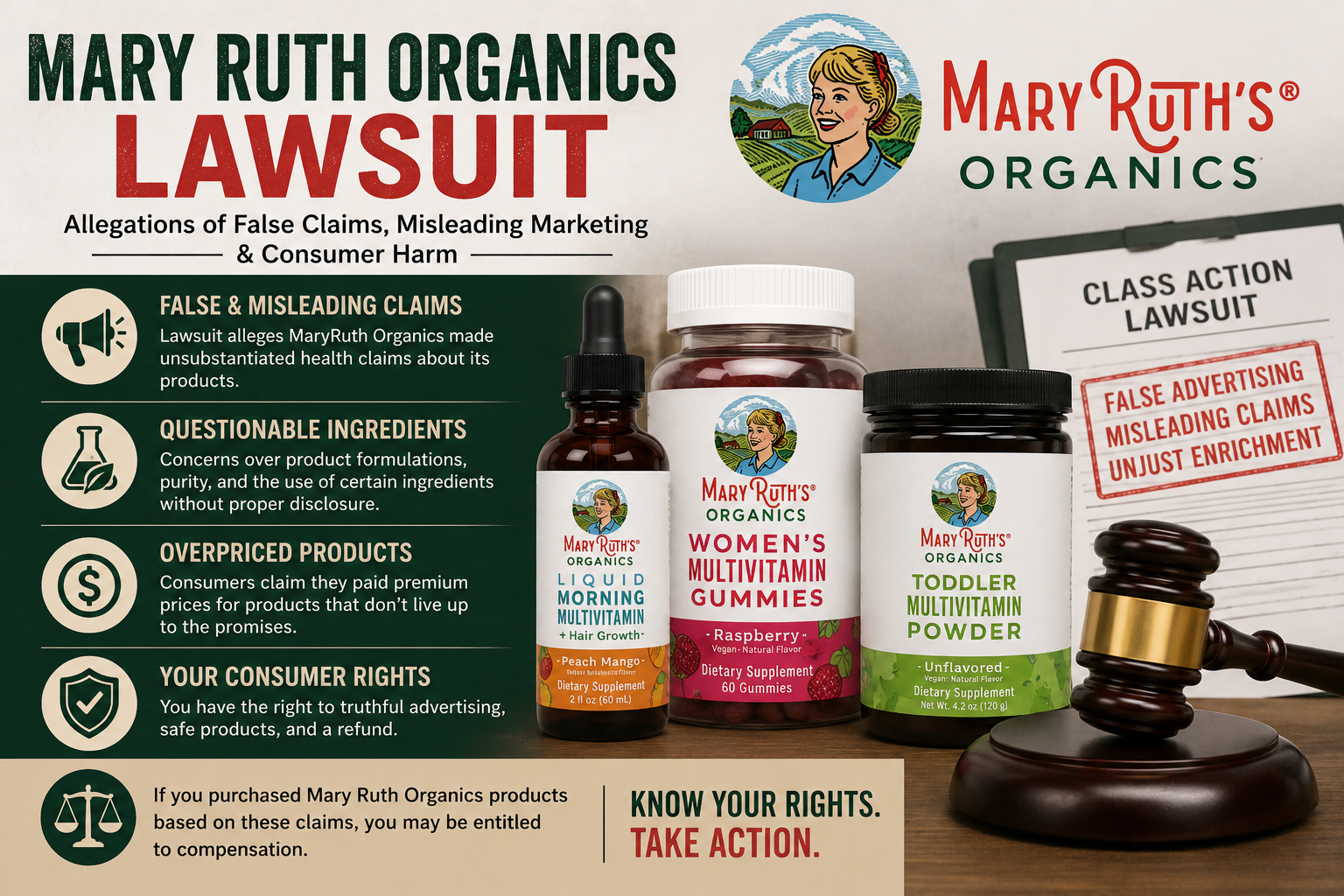
Consumer advocates and civil plaintiffs allege that some products marketed as “100% organic” or “pure” may contain synthetic ingredients that don’t meet that label’s standard. There are also claims that ingredient quantities listed on packaging don’t always match what independent testing finds inside the bottle.
For context on how these kinds of labeling cases typically develop legally, what plaintiffs need to prove, and how class action eligibility works, this breakdown from Sparrow is one of the cleaner reads I found.
The key thing to know: these are civil allegations. No final ruling has been made. The company denies wrongdoing across the board and says its marketing is accurate and supported.
But if “organic” is something you buy specifically because of health conditions, dietary ethics, or your child’s needs, not just because it sounds better, this is worth watching.
So Where Does the Brand Actually Stand Right Now?
Here’s my honest take after going through all of this:
In MaryRuth’s corner:
-
The trademark case is dead. Fully dismissed. Not a loss for the brand.
-
The recall was self-initiated, that’s actually what a responsible quality process looks like in action.
-
No confirmed serious injuries from the recall.
-
No new recalls have been issued since 2021.
Still worth watching:
-
The “organic” labeling claims are unresolved. Civil litigation is ongoing.
-
The manufacturing gap that allowed the 2021 contamination: has it been meaningfully fixed? The brand hasn’t published detailed third-party audit results publicly.
-
The broader supplement industry issue: in the U.S., brands don’t have to prove safety before going to market the way pharmaceutical companies do. That regulatory gap is where most of these disputes live.
What Should You Do If You Use MaryRuth’s Products?
-
If you bought the infant probiotic around 2021: Check those lot numbers (#100420218 or #100520218). If you have those bottles, stop using them and reach out to MaryRuth’s for a refund.
-
If you’re currently using other MaryRuth’s products: The recall was isolated to two lots of one product. No further recalls have been issued since. That’s a meaningful data point.
-
If you believe you were misled by their labeling: Speak to a consumer protection attorney. The class action discussions around the “organic” claims are ongoing, and you may have options depending on your purchase history and what you can document.
-
If you’re just deciding whether to buy: Do what I now do with any supplement brand: look up their FDA history directly at the FDA’s recall database. It’s free, public, and searchable. No brand should get a pass just because their Instagram looks clean.
The Bigger Picture Nobody Wants to Say Out Loud
The reason the mary ruth organics lawsuit story spread so fast isn’t really about MaryRuth’s. It’s about anxiety.
Parents, in particular, are terrified of making the wrong call on what goes into their kids’ bodies. When a brand that built its entire identity on clean, safe, family-first supplements shows up in a legal headline, any legal headline, the fear response kicks in before the facts do.
I get it. I felt it too before I read the actual documents.
What I’d push back on is the idea that legal scrutiny = proven harm. It doesn’t. What it does mean is: this is a brand worth watching with clear eyes, not a brand to panic about or blindly trust.
That’s the stance I’ll keep.
Quick Recap (For the Skimmers)
-
Trademark lawsuit (2022): Competitor sued MaryRuth’s over packaging. Court dismissed it. Story over.
-
Infant probiotic recall (2021): Real contamination risk, self-reported, no confirmed serious injuries. Two specific lots pulled from Target and Amazon.
-
Labeling/advertising claims: Civil allegations still active. “Organic” claims being challenged. No final ruling yet.
Nothing here is legal advice. If a MaryRuth’s product has harmed you or your child, please speak with a licensed attorney in your area. For active recalls, always check FDA.gov directly.