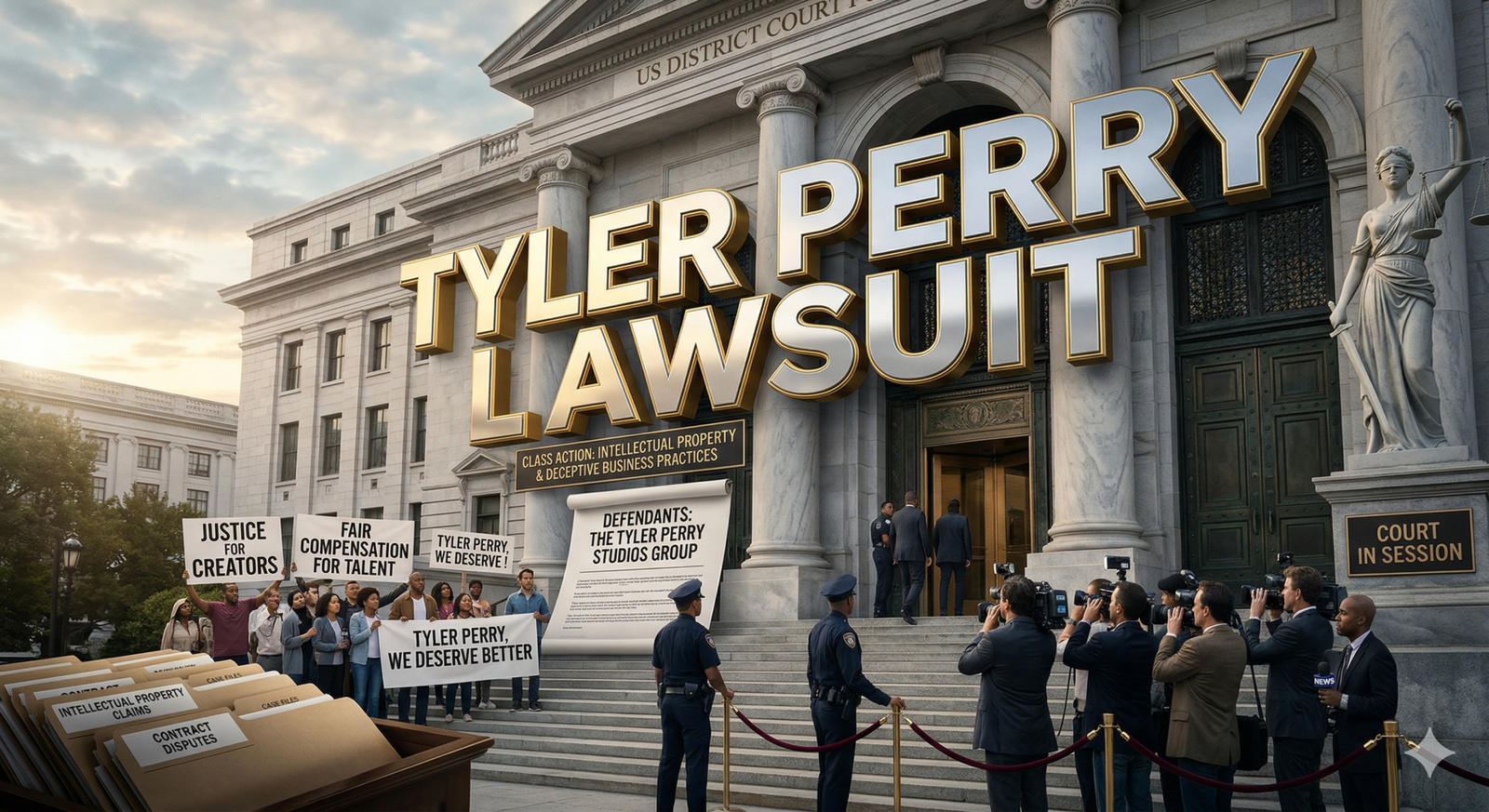
One of the most powerful entertainment empires in Hollywood history was built by a single individual. Creator of Madea, owner of a major studio, and a billionaire filmmaker, Tyler Perry is now facing the most serious legal challenges of his career.
Two separate lawsuits filed in 2025 by different individuals have placed him under intense public and legal scrutiny. Tyler Perry Lawsuit has drawn widespread attention, with a combined $337 million in damages being sought and allegations involving sexual misconduct, workplace harassment, and possible industry cover-ups.
This article breaks down verified details, including who filed the cases, what is being alleged, how Perry has responded, and the current legal status.
Who Is Tyler Perry?
From Struggling Playwright to Billionaire Mogul
A journey marked by hardship and resilience defines Perry’s rise in entertainment. Born Emmitt Perry Jr. in New Orleans in 1969, he overcame poverty and personal trauma to become a self-made billionaire.
Creation of the Madea character launched a highly successful franchise, eventually leading to the development of a vast entertainment empire. In 2019, Tyler Perry Studios opened in Atlanta, spanning 330 acres and making him the first Black individual to fully own a major Hollywood studio.
Numerous films and television series followed, including The Oval, Ruthless, Sistas, and Acrimony. Influence over aspiring Black actors and creatives has been significant, placing Perry in a powerful industry position now central to the ongoing Tyler Perry Lawsuit controversy.
First Lawsuit: Derek Dixon and $260 Million
Who Is Derek Dixon?
An actor known for appearing in 85 episodes of The Oval, Dixon played the recurring character Dale. Initial contact with Perry reportedly occurred in 2019 during an event at Tyler Perry Studios in Atlanta, where Dixon was working as event staff.
Following that meeting, communication continued, leading to an audition opportunity. A small role in Ruthless came first, followed by a larger role in The Oval.
Allegations Presented
A lawsuit filed on June 13, 2025, in Los Angeles Superior Court outlines claims of sexual harassment, assault, battery, and quid pro quo misconduct. According to the complaint, inappropriate messages and advances began early in the professional relationship.
Included in the filing were alleged text messages suggesting explicit intent. Additional claims describe incidents of unwanted physical contact, including an alleged situation where Perry entered Dixon’s bed uninvited.
Professional leverage plays a central role in the accusations. Statements in the complaint suggest that Dixon’s role on The Oval could be affected depending on his response to Perry’s alleged advances. Promises of career benefits including financial incentives and production opportunities were also mentioned.
Relocation to Los Angeles in 2023 was described as an attempt to create distance. After continued alleged contact, a formal complaint was filed with the Equal Employment Opportunity Commission in January 2025, followed by the lawsuit seeking $260 million in damages.
Attorney Matthew Boyd denied all claims, describing the case as an attempt to exploit Perry financially.
Second Lawsuit: Mario Rodriguez and $77 Million
Who Is Mario Rodriguez?
A model and aspiring actor, Rodriguez had a minor role in Boo! A Madea Halloween (2016). Initial contact allegedly occurred in 2015 through a mutual connection at a Los Angeles gym.
Subsequent communication led to meetings at Perry’s residence, reportedly for discussions about acting opportunities.
Allegations Presented
Claims outlined in the December 25, 2025 lawsuit include repeated unwanted advances between 2015 and 2019. Allegations involve inappropriate physical contact and explicit statements tied to promises of financial security and career support.
Two incidents reportedly involved payments of $5,000 following alleged encounters. Communication between the two allegedly continued even after Rodriguez ended contact in 2019.
Notably, Lionsgate Films was named as a co-defendant. Claims suggest the company was aware of alleged behavior and failed to act under its internal policies.
Attorney Alex Spiro rejected the allegations, calling them financially motivated. Meanwhile, Jonathan Delshad defended the claims and denied any suggestion of misconduct in filing the case.
Legal Response from Tyler Perry
Denials and Court Actions
Consistent and firm denials have been issued by Perry and his legal team. Court filings in February 2026 rejected all allegations in the Rodriguez case, arguing insufficient legal grounds and lack of proven damages.
Efforts have also been made to move cases into federal jurisdiction. The Dixon case was transferred to the Northern District of Georgia after residency challenges, while the Rodriguez case is undergoing similar procedural efforts.
As of early 2026, both lawsuits remain active. No settlements or trial dates have been publicly confirmed, keeping the Tyler Perry Lawsuit proceedings ongoing.
Broader Implications for Hollywood
Power Dynamics and Quid Pro Quo
Central themes in both lawsuits involve alleged exchanges between career advancement and personal compliance. Such claims highlight vulnerabilities faced by aspiring actors working under influential industry figures.
Role of Major Studios
Inclusion of Lionsgate introduces questions about corporate responsibility. Expectations around monitoring partner conduct and enforcing ethical standards may become a focal point in legal proceedings.
Importance of Pattern Allegations
Similarity between multiple claims can influence how courts evaluate credibility. While each case must be proven independently, repeated allegations often carry additional legal weight and strengthen the overall Tyler Perry Lawsuit narrative.
Conclusion
Serious legal challenges now define a critical moment in Perry’s career. Claims brought by Derek Dixon and Mario Rodriguez involve allegations of misconduct tied to professional opportunities, with total damages sought reaching $337 million.
All accusations have been denied, with Perry maintaining that the lawsuits are fabricated and financially motivated. Legal proceedings remain ongoing in federal court, with outcomes still uncertain.
Broader conversations around power, accountability, and industry ethics have already been triggered, ensuring lasting impact regardless of the final verdict.