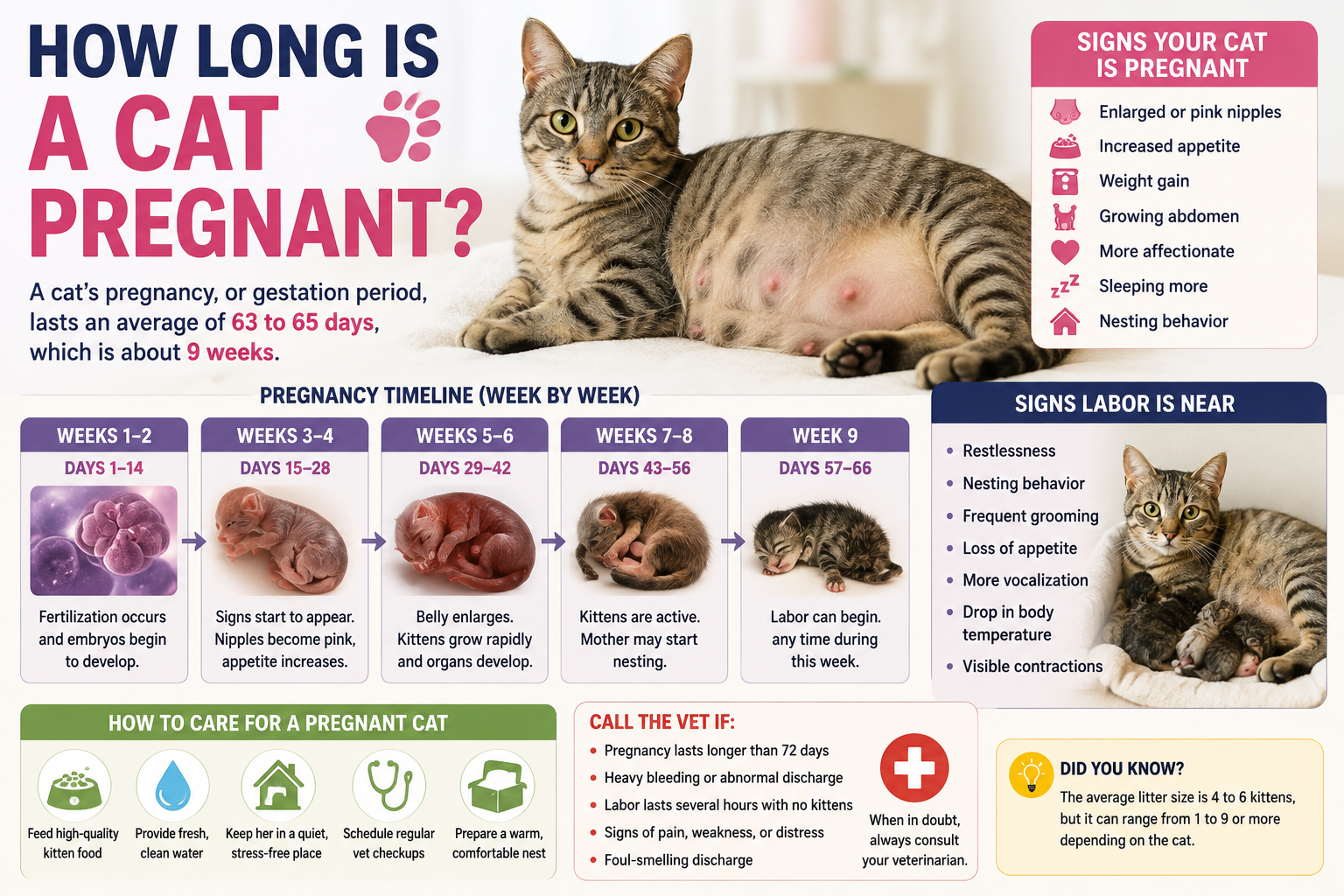
If your cat is expecting kittens, one of the first questions you’ll probably ask is, how long is a cat pregnant? Understanding the length of a cat’s pregnancy and the changes that occur during each stage can help you prepare for the arrival of healthy kittens and provide the best possible care for the mother.
A cat’s pregnancy, also known as the gestation period, is relatively short compared to many other mammals. During this time, your cat will experience physical and behavioral changes as the kittens grow and develop. Knowing what to expect can make the process less stressful for both you and your pet.
This guide explains how long cats stay pregnant, the stages of pregnancy, common signs, care tips, and what happens when labor begins.
How Long Is a Cat Pregnant?
The average cat pregnancy lasts 63 to 65 days, which is about 9 weeks. However, a normal gestation period can range from 58 to 72 days, depending on factors such as the cat’s age, breed, overall health, and the number of kittens she is carrying.
Most healthy cats deliver their kittens naturally within this time frame.
Quick Pregnancy Timeline
| Pregnancy Stage | Duration | What Happens |
|---|---|---|
| Week 1–2 | Days 1–14 | Fertilization and embryo development |
| Week 3–4 | Days 15–28 | Pregnancy signs become noticeable |
| Week 5–6 | Days 29–42 | Belly begins to enlarge, kittens grow rapidly |
| Week 7–8 | Days 43–56 | Kittens become active, nesting behavior begins |
| Week 9 | Days 57–65 | Labor may begin at any time |
Signs Your Cat Is Pregnant
Many signs become noticeable after the first few weeks.
Common symptoms include:
- Enlarged or pink nipples (“pinking up”)
- Increased appetite
- Weight gain
- A growing abdomen
- More affectionate behavior
- Sleeping more than usual
- Reduced activity
- Nesting behavior near the end of pregnancy
Some cats also experience mild morning sickness during the early weeks.
Week-by-Week Development
Weeks 1–2
During the first two weeks, fertilized eggs travel to the uterus and begin developing. At this stage, there are usually no obvious outward signs of pregnancy.
Weeks 3–4
Around the third week, your cat’s nipples may become larger and pinker. Appetite often increases, and some cats become more affectionate.
A veterinarian may be able to confirm pregnancy through an examination or ultrasound during this period.
Weeks 5–6
The kittens grow rapidly, and the mother’s abdomen becomes noticeably rounder. She will likely eat more to support the growing litter.
Providing high-quality kitten food is often recommended because it contains additional nutrients needed during pregnancy.
Weeks 7–8
By this stage, the kittens are well developed, and you may even notice movement in the mother’s abdomen.
Many cats begin searching for quiet, comfortable places where they can safely give birth.
Week 9
Labor can begin at any time during the final week. Your cat may become restless, lose interest in food, or spend more time in her nesting area.
Real-World Scenario
Imagine you recently adopted a stray cat and notice that her belly seems larger each week. After visiting the veterinarian, you learn she’s about five weeks pregnant. You prepare a quiet nesting area, switch her to a nutritious diet, and monitor her closely. A month later, she safely delivers a healthy litter of kittens, thanks to early preparation and proper care.
My Experience
I’ve found that owners who understand the normal stages of feline pregnancy often feel much more confident and prepared when it’s time for the kittens to arrive.
How to Care for a Pregnant Cat
Proper care is essential for the health of both the mother and her kittens.
Provide High-Quality Nutrition
Pregnant cats require more calories and nutrients than usual. Many veterinarians recommend feeding a premium kitten formula during pregnancy and nursing.
Offer Fresh Water
Ensure clean drinking water is always available.
Minimize Stress
Keep your cat in a calm, quiet environment away from loud noises or unfamiliar animals.
Schedule Veterinary Checkups
Routine examinations help monitor the pregnancy and identify any potential complications early.
Prepare a Nesting Area
A clean, warm, and quiet box lined with soft blankets provides a comfortable place for your cat to give birth.
Reas More:stop in the name of god
Comparison Table: Normal Pregnancy vs. When to Contact a Veterinarian
| Situation | Usually Normal | Veterinary Attention Needed |
|---|---|---|
| Increased appetite | ✔ | |
| Weight gain | ✔ | |
| Nesting behavior | ✔ | |
| Mild tiredness | ✔ | |
| Heavy bleeding | ✔ | |
| Severe vomiting | ✔ | |
| Labor lasting several hours without kittens | ✔ | |
| Signs of extreme pain | ✔ |
Signs Labor Is Near
As delivery approaches, you may notice:
- Restlessness
- Nesting behavior
- Frequent grooming
- Reduced appetite
- Increased vocalization
- Drop in body temperature
- Visible contractions
Many cats successfully deliver their kittens without assistance, but it’s important to monitor them from a distance.
When Should You Call a Veterinarian?
Seek veterinary care if:
- Pregnancy lasts longer than 72 days.
- Your cat experiences heavy bleeding.
- Labor continues for several hours without producing a kitten.
- A kitten appears stuck.
- Your cat becomes extremely weak or distressed.
- There is a foul-smelling discharge.
Prompt veterinary attention can help protect both the mother and her kittens.
Frequently Asked Questions
How long is a cat pregnant?
Most cats are pregnant for 63 to 65 days, although pregnancies between 58 and 72 days can still be normal.
How can I tell if my cat is pregnant?
Common signs include enlarged pink nipples, increased appetite, weight gain, a growing abdomen, and nesting behavior later in pregnancy.
How many kittens does a cat usually have?
The average litter contains 4 to 6 kittens, though some cats may have fewer or significantly more.
Should I feed my pregnant cat differently?
Yes. High-quality kitten food is often recommended because it provides extra calories and nutrients needed during pregnancy and nursing.
Can cats give birth without help?
Yes. Most healthy cats deliver their kittens naturally, but you should monitor the process and contact a veterinarian if complications arise.
When should I prepare a nesting box?
It’s best to have a nesting area ready by the seventh week of pregnancy so your cat has time to become comfortable with it.
Conclusion
Understanding how long is a cat pregnant helps you provide the right care throughout each stage of pregnancy. Most cats carry their kittens for about 63 to 65 days, during which they experience noticeable physical and behavioral changes. By providing proper nutrition, minimizing stress, scheduling regular veterinary checkups, and preparing a safe nesting area, you can support a healthy pregnancy and delivery.
With patience, preparation, and attentive care, you’ll be ready to welcome a new litter of kittens and help ensure both the mother and her babies get the best possible start.