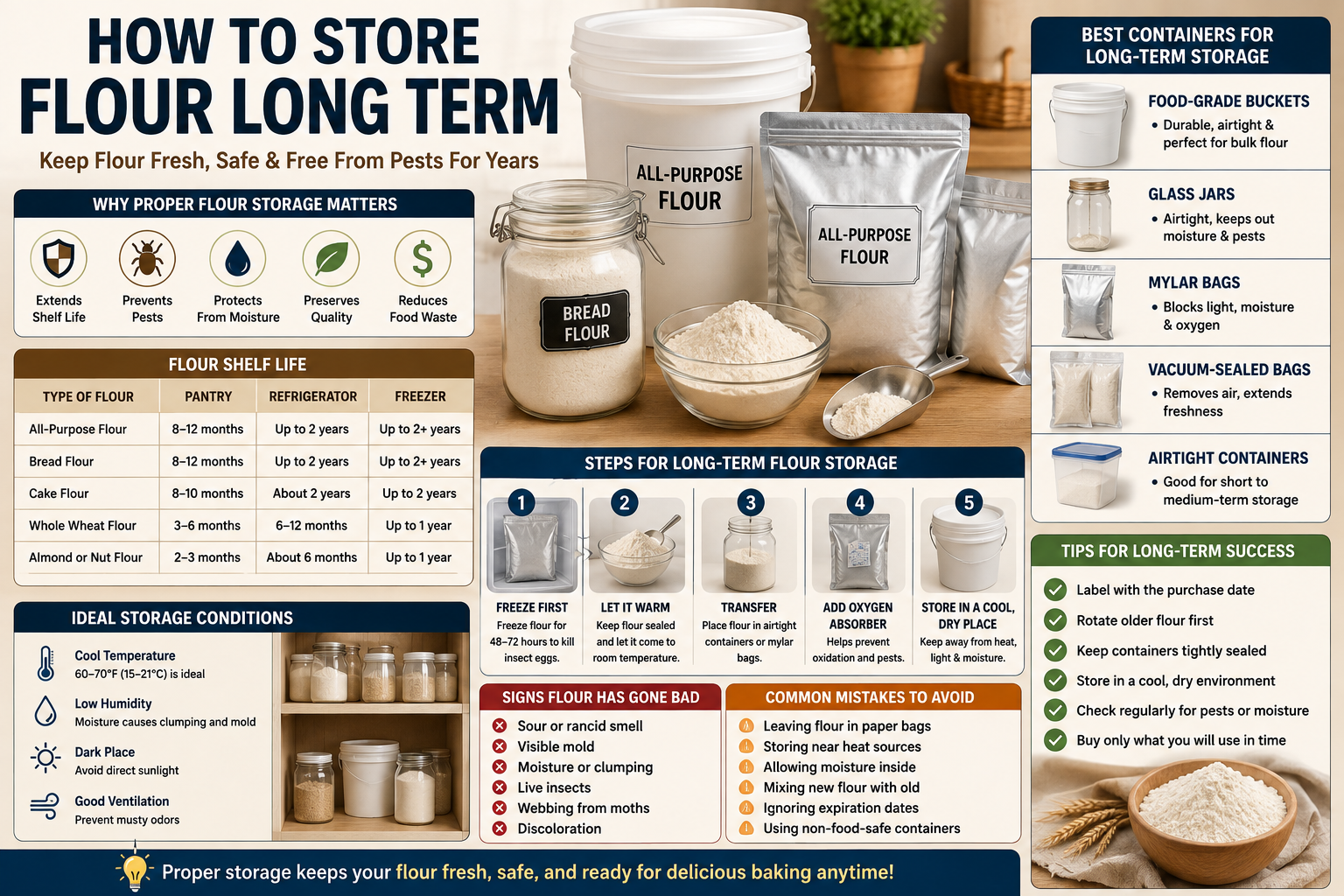
Flour is one of the most essential pantry staples, used in everything from homemade bread and cakes to pasta, cookies, and pizza dough. If you buy flour in bulk or prepare for emergencies, knowing how to store flour long term is essential to prevent spoilage, pests, moisture damage, and loss of quality.
When stored correctly, flour can stay fresh for months or even years while maintaining its baking performance. However, improper storage can lead to mold, insects, unpleasant odors, or rancidity—especially with whole grain varieties.
This guide explains the best long-term flour storage methods, ideal containers, shelf life, common mistakes, and expert tips to help you maximize freshness.
Why Proper Flour Storage Matters
Flour naturally absorbs moisture and odors from its surroundings. It’s also attractive to pantry pests such as weevils and moths. Proper storage helps:
- Extend shelf life
- Prevent insect infestations
- Protect against moisture
- Preserve flavor and texture
- Maintain baking quality
- Reduce food waste
Whether you’re storing a single bag or a large emergency supply, choosing the right storage method makes a significant difference.
How Long Does Flour Last?
The shelf life depends on the type of flour and where it’s stored.
Read More:how many chapters in re4 remake
| Type of Flour | Pantry | Refrigerator | Freezer |
|---|---|---|---|
| All-Purpose Flour | 8–12 months | Up to 2 years | Up to 2 years or longer |
| Bread Flour | 8–12 months | Up to 2 years | Up to 2 years or longer |
| Cake Flour | 8–10 months | About 2 years | Up to 2 years |
| Whole Wheat Flour | 3–6 months | 6–12 months | Up to 1 year |
| Almond or Nut Flour | 2–3 months | 6 months | Up to 1 year |
Whole grain and nut flours contain more natural oils, making them spoil faster than refined white flour.
Best Containers for Long-Term Flour Storage
Choosing an airtight container is one of the most important steps.
Good options include:
- Food-grade plastic buckets
- Glass jars with airtight lids
- Mylar bags
- Vacuum-sealed bags
- Airtight food storage containers
For very long-term storage, many people combine Mylar bags with oxygen absorbers and place them inside food-grade buckets for extra protection.
Store Flour in a Cool, Dry Place
Temperature plays a major role in preserving flour.
The ideal storage location should be:
- Cool
- Dry
- Dark
- Well-ventilated
- Away from direct sunlight
Avoid storing flour near ovens, dishwashers, or windows where temperatures fluctuate frequently.
Freeze Flour Before Long-Term Storage
If you purchase flour from a grocery store, freezing it for 48–72 hours before storing can help eliminate any insect eggs that may already be present.
After freezing:
- Allow the flour to return to room temperature while sealed.
- Transfer it to an airtight container.
- Store it in your preferred location.
This simple step can help prevent future pest problems.
Comparison Table: Storage Methods
| Storage Method | Shelf Life | Best For |
|---|---|---|
| Original Paper Bag | Short | Temporary storage |
| Airtight Container | Long | Everyday household use |
| Vacuum-Sealed Bag | Very Long | Bulk storage |
| Mylar Bag + Oxygen Absorber | Excellent | Emergency food storage |
| Freezer | Excellent | Whole wheat and specialty flours |
Real-World Scenario
Imagine buying a 25-pound bag of all-purpose flour during a warehouse sale because it’s significantly cheaper than purchasing smaller bags. Instead of leaving it in its original packaging, you divide it into several Mylar bags with oxygen absorbers, seal them, and place them inside food-grade buckets. Months later, when you need flour for baking, it remains fresh, dry, and free from insects, saving both money and reducing food waste.
My Experience
I’ve found that transferring flour into airtight containers immediately after purchase keeps it fresher for much longer and makes it easier to organize the pantry.
Signs Flour Has Gone Bad
Before using stored flour, check for signs of spoilage.
Discard flour if you notice:
- A sour or rancid smell
- Visible mold
- Moisture or clumping
- Live insects
- Webbing from pantry moths
- Unusual discoloration
Fresh flour should have a mild, neutral smell and a soft, powdery texture.
Common Mistakes to Avoid
Avoid these storage mistakes:
- Leaving flour in open paper bags
- Storing near heat sources
- Allowing moisture into containers
- Mixing new flour with old flour
- Ignoring expiration dates
- Using containers that are not food-safe
Taking a few extra precautions can significantly extend shelf life.
Tips for Long-Term Success
To maximize freshness:
- Label containers with the purchase date.
- Rotate older flour before opening new supplies.
- Keep storage containers tightly sealed.
- Store in a consistently cool environment.
- Inspect flour periodically for pests or moisture.
- Buy only the amount you expect to use within its recommended storage period.
Frequently Asked Questions
How long can flour be stored?
All-purpose flour typically lasts 8–12 months in a pantry and up to 2 years when refrigerated or frozen in airtight packaging.
What is the best container for long-term flour storage?
Food-grade buckets with Mylar bags and oxygen absorbers are among the best options for storing flour over extended periods.
Can flour be frozen?
Yes. Freezing flour helps preserve freshness and can eliminate insect eggs before long-term storage.
Does flour expire?
Yes. While flour may remain safe beyond its printed date if stored properly, its quality gradually declines over time, especially for whole grain varieties.
Should I use oxygen absorbers?
Oxygen absorbers are beneficial for long-term emergency storage because they help reduce oxidation and discourage insect activity.
How do I know if flour is still good?
Fresh flour should smell neutral and appear dry and powdery. If it smells sour, shows signs of mold, or contains insects, it should be discarded.
Conclusion
Learning how to store flour long term is a simple but valuable skill that helps reduce waste, protect your pantry from pests, and ensure you always have fresh flour ready for baking. By choosing airtight containers, keeping flour in a cool and dry location, freezing it before storage when appropriate, and checking it regularly, you can significantly extend its shelf life.
Whether you’re stocking up for everyday baking or building an emergency food supply, proper storage methods will keep your flour fresh, safe, and ready to use whenever you need it.