Most spider bites are harmless and heal on their own within a few days. However, certain venomous spiders can cause more serious reactions that require prompt treatment. This guide explains how to identify a spider bite, what symptoms to expect, how to treat it at home, and when to see a healthcare provider.
What Does a Spider Bite Look Like?
Table of Contents
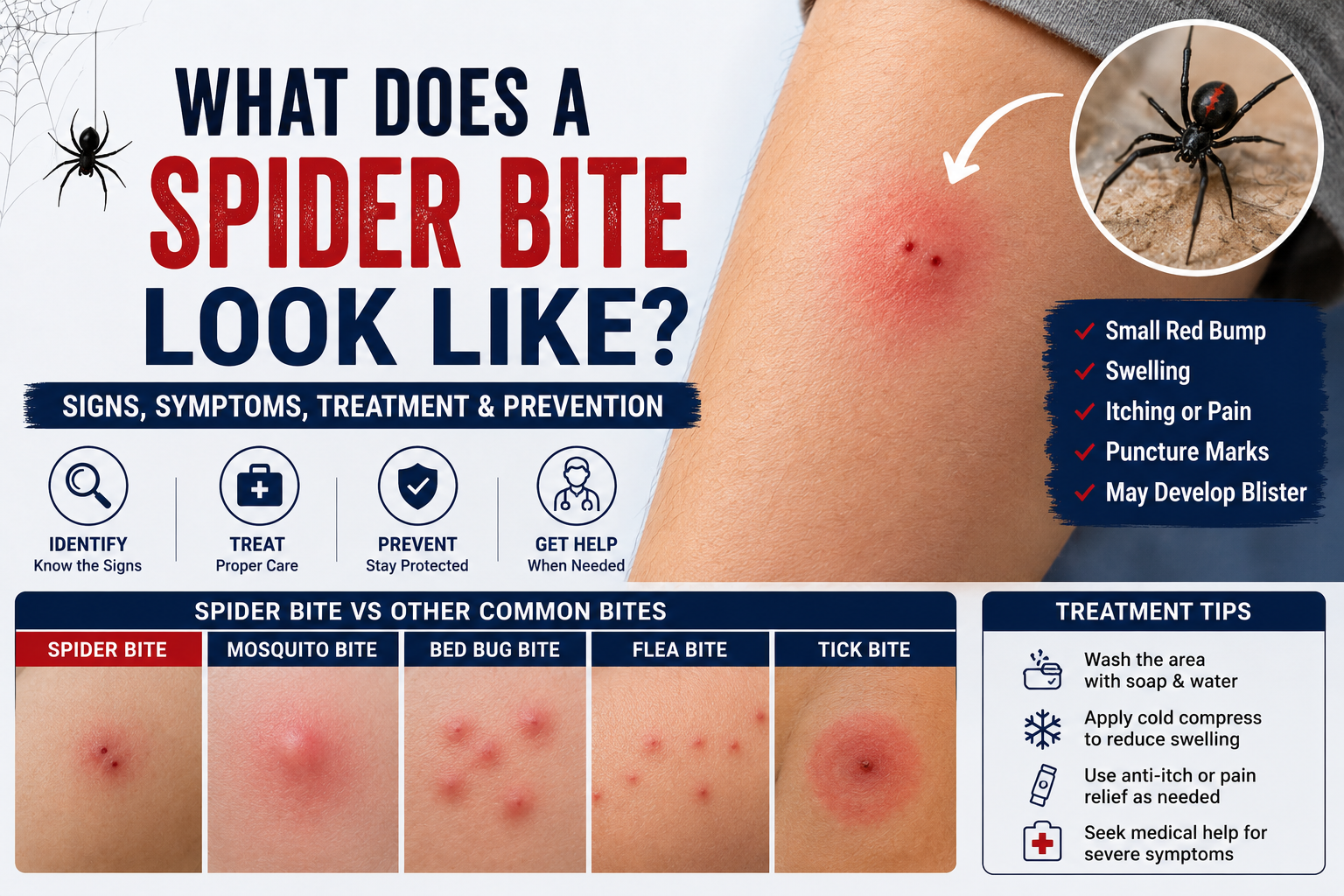
ToggleA typical spider bite often appears as a small, red, slightly swollen bump on the skin. It may resemble a mosquito bite or pimple and can be itchy or mildly painful.
Common characteristics include:
- A small red or pink bump
- Mild swelling around the bite
- Itching or burning sensation
- Tenderness when touched
- Occasionally two tiny puncture marks close together
In many cases, the bite becomes less noticeable within a few days without any special treatment.
Common Symptoms of a Spider Bite
Symptoms vary depending on the spider species and your body’s reaction.
Mild Symptoms
Most non-venomous spider bites cause only minor discomfort, such as:
- Redness
- Mild swelling
- Itching
- Slight pain
- Warm skin around the bite
These symptoms usually improve within a week.
Moderate Symptoms
Some bites may produce:
- Increasing redness
- Blister formation
- Muscle soreness near the bite
- Mild headache
- Fatigue
Severe Symptoms
Although uncommon, venomous spider bites may cause:
- Severe pain
- Muscle cramps
- Fever
- Chills
- Nausea
- Difficulty breathing
- Sweating
- Rapid heartbeat
These symptoms require immediate medical evaluation.
What Can Spider Bites Be Mistaken For?
Many skin conditions resemble spider bites.
Common look-alikes include:
- Mosquito bites
- Flea bites
- Bed bug bites
- Tick bites
- Ant bites
- Allergic skin reactions
- Ingrown hairs
- Pimples
- Minor bacterial skin infections
Because of these similarities, it’s often difficult to confirm a spider bite unless the spider was actually seen.
Read More:best whitening toothpaste
Comparison Table: Spider Bite vs Other Common Bites
| Skin Condition | Appearance | Itching | Pain | Common Location |
|---|---|---|---|---|
| Spider Bite | Single red bump, sometimes two puncture marks | Mild | Mild to moderate | Anywhere on exposed skin |
| Mosquito Bite | Raised itchy welt | High | Low | Arms, legs, neck |
| Bed Bug Bite | Multiple bites in clusters | High | Low | Arms, shoulders, back |
| Flea Bite | Small red spots in groups | High | Mild | Ankles and lower legs |
| Tick Bite | Small bump with attached tick or expanding rash | Low | Mild | Hidden skin folds |
Common Types of Spider Bites
Non-Venomous Spider Bites
The majority of spiders are harmless to humans.
Their bites usually cause:
- Minor redness
- Slight swelling
- Temporary itching
Most heal naturally with basic first aid.
Venomous Spider Bites
Certain spiders possess venom capable of causing significant symptoms.
These bites may produce:
- Intense pain
- Large swelling
- Blisters
- Tissue damage
- Muscle cramps
- Whole-body symptoms
Fortunately, serious spider bites remain relatively rare.
Real-World Scenario
Imagine you’re cleaning out a garage and later notice a small red bump on your forearm. At first, it feels like a mosquito bite, but over the next several hours, the area becomes more swollen and slightly painful.
You wash the area, apply a cold compress, and monitor it. Since the swelling begins to improve the next day without severe symptoms, the bite heals completely within a week. This is similar to how many mild spider bites progress.
My Experience
I’ve found that many people immediately assume any unexplained skin bump is a spider bite, but in many cases, it turns out to be another type of insect bite or a minor skin irritation.
How to Treat a Spider Bite at Home
For most mild bites, simple first aid is enough.
Clean the Area
Wash the bite gently with soap and water to reduce the risk of infection.
Apply a Cold Compress
Place a cold pack or wrapped ice pack on the bite for 10–15 minutes at a time.
This helps reduce swelling and discomfort.
Elevate the Affected Area
If the bite is on an arm or leg, keeping it elevated may help reduce swelling.
Avoid Scratching
Scratching can damage the skin and increase the risk of infection.
Use Over-the-Counter Relief
Depending on your symptoms, healthcare professionals may recommend:
- Antihistamines for itching
- Pain relievers for discomfort
- Hydrocortisone cream for inflammation
Always follow the product directions or your healthcare provider’s advice.
When Should You See a Doctor?
Seek medical attention if you experience:
- Severe pain
- Difficulty breathing
- Rapidly spreading redness
- High fever
- Muscle cramps
- Vomiting
- Large blisters
- Skin turning dark or developing an open sore
- Signs of infection such as pus or increasing warmth
Early treatment is especially important if a venomous spider bite is suspected.
How Long Does a Spider Bite Last?
Recovery depends on the severity of the bite.
| Bite Severity | Typical Healing Time |
|---|---|
| Mild | 3–7 days |
| Moderate | 1–2 weeks |
| Severe | Several weeks or longer with medical treatment |
Most uncomplicated bites heal without lasting problems.
How to Prevent Spider Bites
Reducing your exposure to spiders lowers the risk of bites.
Helpful prevention tips include:
- Wear gloves when cleaning storage areas.
- Shake out shoes before wearing them.
- Inspect bedding in areas where spiders are common.
- Reduce indoor clutter.
- Seal cracks around windows and doors.
- Keep garages and basements clean.
- Avoid placing hands into dark spaces without looking first.
Common Myths About Spider Bites
Myth: Every Red Bump Is a Spider Bite
False. Most unexplained skin bumps are caused by other insects or skin conditions.
Myth: All Spider Bites Are Dangerous
False. The vast majority of spider bites are mild and heal without complications.
Myth: You Should Cut the Bite to Remove Venom
False. Cutting or attempting to suck out venom is not recommended and may worsen the injury.
Frequently Asked Questions
What does a spider bite usually look like?
Most spider bites appear as a small red, swollen bump that may itch or feel tender. Some bites may show two tiny puncture marks.
How can I tell if a spider bite is serious?
Severe pain, muscle cramps, difficulty breathing, fever, extensive swelling, or worsening skin damage should be evaluated by a healthcare professional immediately.
Do all spider bites leave two puncture marks?
No. While spiders have two fangs, puncture marks are often too small to see clearly.
Can a spider bite become infected?
Yes. Like any break in the skin, a spider bite can become infected, especially if it’s scratched frequently.
Should I put ice on a spider bite?
Yes. Applying a cold compress for short periods can help reduce swelling and discomfort.
How long does itching last?
For mild bites, itching usually improves within several days as the skin heals.
Conclusion
Understanding what does a spider bite look like can help you respond calmly and appropriately if you notice an unusual skin bump. Most spider bites cause only mild redness, swelling, and itching, resolving with simple home care in a few days. However, severe pain, spreading skin damage, fever, or breathing difficulties may indicate a more serious reaction that requires prompt medical attention.
By recognizing the common signs, practicing basic first aid, and taking preventive measures around your home, you can reduce the risk of complications and feel more confident in identifying and managing possible spider bites.