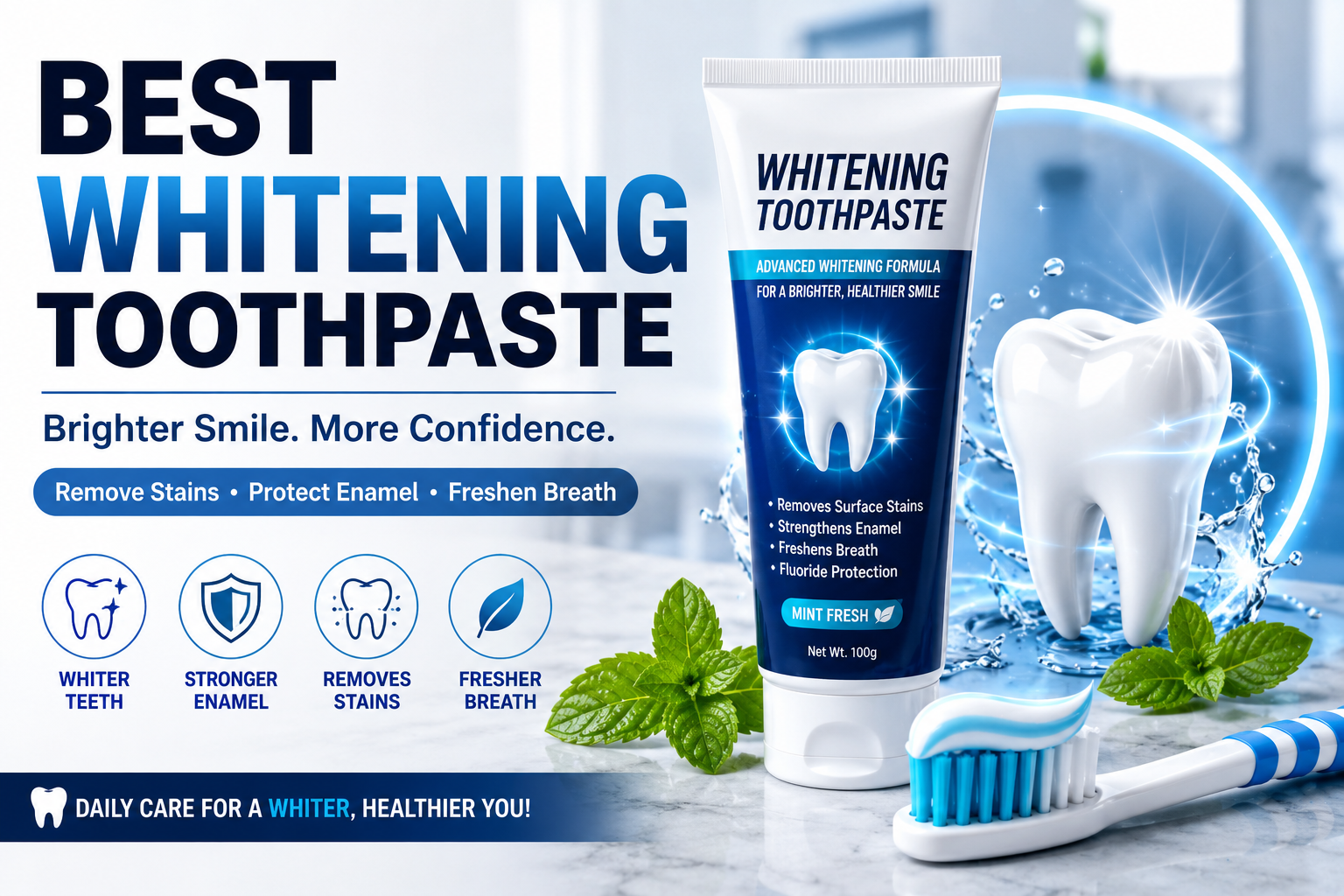
A bright, confident smile can make a lasting first impression. While professional whitening treatments are effective, they can also be expensive and time-consuming. That’s why many people look for the best whitening toothpaste as an affordable and convenient way to improve the appearance of their teeth at home.
However, with so many products claiming to deliver dazzling results, choosing the right toothpaste isn’t always easy. Some formulas remove surface stains, while others target deeper discoloration. Understanding how whitening toothpaste works can help you make an informed decision and achieve better results without damaging your enamel.
This guide covers everything you need to know, including how whitening toothpaste works, key ingredients, what to look for, common myths, and tips for maintaining a brighter smile.
What Is Whitening Toothpaste?
Whitening toothpaste is specially formulated to help remove stains from the surface of your teeth while supporting overall oral health. Unlike professional bleaching treatments that use higher concentrations of whitening agents, most whitening toothpastes focus on polishing away stains caused by everyday foods and beverages.
Many also contain mild whitening ingredients that gradually brighten teeth with regular use.
How Does Whitening Toothpaste Work?
Most whitening toothpastes work in one or more of these ways:
- Removing surface stains with gentle polishing agents
- Breaking down discoloration caused by coffee, tea, and wine
- Preventing new stains from sticking to enamel
- Supporting healthy enamel for a brighter appearance
Results usually become noticeable after several weeks of consistent brushing, although the exact timeline varies depending on the level of staining.
Common Whitening Ingredients
Understanding the ingredients can help you select a toothpaste that matches your needs.
Mild Abrasives
These gently polish away stains without harming healthy enamel when used correctly.
Common examples include:
- Hydrated silica
- Calcium carbonate
Hydrogen Peroxide
Some whitening toothpastes include small amounts of hydrogen peroxide to help lighten stains beyond simple polishing.
Baking Soda
Baking soda is well known for its stain-removing ability and can also help neutralize acids in the mouth.
Fluoride
Although fluoride doesn’t whiten teeth, it strengthens enamel and helps prevent cavities, making it an essential ingredient in many quality toothpastes.
Benefits of Whitening Toothpaste
Using the right whitening toothpaste consistently can offer several advantages.
Removes Everyday Stains
Coffee, tea, soda, berries, and tobacco products often leave surface stains that whitening toothpaste can gradually reduce.
Boosts Confidence
A cleaner, brighter smile often helps people feel more comfortable during conversations, interviews, and social events.
Supports Daily Oral Hygiene
Most whitening formulas also help fight plaque, freshen breath, and strengthen teeth.
Affordable Alternative
Compared to professional whitening treatments, whitening toothpaste offers an economical way to maintain a brighter smile.
What Causes Tooth Discoloration?
Several factors contribute to stained or yellow teeth.
Common causes include:
- Coffee
- Tea
- Red wine
- Smoking
- Aging
- Certain medications
- Poor oral hygiene
- Dark-colored foods
Knowing the source of discoloration helps set realistic expectations for whitening toothpaste.
Read More: how many hours in a week
Comparison of Whitening Options
| Whitening Method | Cost | Speed | Best For |
|---|---|---|---|
| Whitening Toothpaste | Low | Gradual | Surface stains and daily maintenance |
| Whitening Strips | Moderate | Moderate | Moderate discoloration |
| Professional Whitening | High | Fast | Deep or stubborn stains |
| Whitening Pens | Moderate | Moderate | Touch-ups between treatments |
Each option has its strengths, but many people start with whitening toothpaste because it’s easy to use and fits naturally into a daily routine.
How to Choose the Right Whitening Toothpaste
Not every whitening toothpaste is the same.
When shopping, consider these factors.
Look for Fluoride
Fluoride helps protect enamel while reducing the risk of cavities.
Consider Tooth Sensitivity
If you have sensitive teeth, choose formulas designed specifically to minimize discomfort.
Check the Abrasiveness
Extremely abrasive toothpaste may wear enamel over time.
Choose products that balance effective stain removal with gentle cleaning.
Read Ingredient Labels
Products containing ingredients like hydrated silica or baking soda often perform well at removing surface stains.
Real-World Scenario
Imagine someone who enjoys two cups of coffee every morning and occasionally drinks red wine with dinner. After several months, they notice their teeth looking slightly yellow despite brushing twice daily.
By switching to a quality whitening toothpaste, reducing stain-causing drinks when possible, and brushing consistently, they gradually notice a brighter smile within a few weeks—all without changing their daily routine dramatically.
My Experience
I’ve found that using a whitening toothpaste consistently, rather than expecting overnight results, leads to more noticeable improvements while keeping daily oral care simple and sustainable.
Tips for Better Whitening Results
Using whitening toothpaste correctly can improve its effectiveness.
Consider these habits:
- Brush twice daily for two minutes.
- Replace your toothbrush every three months.
- Floss every day.
- Drink water after coffee or tea.
- Visit your dentist for regular cleanings.
- Limit tobacco use.
- Avoid brushing immediately after acidic drinks.
These small habits work together to keep your smile brighter for longer.
Common Myths About Whitening Toothpaste
Myth 1: It Changes Tooth Color Overnight
Whitening toothpaste works gradually. Most products require consistent use before noticeable improvements appear.
Myth 2: All Whitening Toothpaste Damages Enamel
Quality products are designed to be safe when used as directed. Choosing a reputable formula and brushing gently helps protect enamel.
Myth 3: It Works Like Professional Whitening
Professional treatments typically use stronger whitening agents capable of addressing deeper stains, while toothpaste mainly targets surface discoloration.
Can Whitening Toothpaste Remove Deep Stains?
It depends on the cause.
Surface stains from food and beverages often respond well to whitening toothpaste.
However, deeper discoloration caused by aging, medications, or internal tooth changes may require professional whitening treatments recommended by a dental professional.
Maintaining White Teeth After Whitening
Once you’ve achieved a brighter smile, maintaining it becomes easier with consistent habits.
Helpful practices include:
- Brush twice daily.
- Floss regularly.
- Drink through a straw when possible.
- Reduce sugary beverages.
- Schedule routine dental checkups.
- Continue using whitening toothpaste as part of your daily oral care.
Consistency is the key to long-lasting results.
Frequently Asked Questions
Does whitening toothpaste really work?
Yes. Most whitening toothpastes effectively remove surface stains and gradually improve the appearance of your teeth when used consistently.
How long does it take to see results?
Many people notice visible improvements after two to six weeks of regular brushing, depending on the level of staining.
Is whitening toothpaste safe for everyday use?
Most reputable whitening toothpastes are designed for daily use. Following the manufacturer’s directions helps ensure safe and effective results.
Can whitening toothpaste damage enamel?
Quality products are formulated to clean stains while protecting enamel. Avoid excessive brushing pressure or overly abrasive formulas.
Does whitening toothpaste work on crowns or veneers?
No. Whitening toothpaste generally does not change the color of crowns, veneers, fillings, or other dental restorations.
Should I use whitening toothpaste if I have sensitive teeth?
Yes, but choose a whitening toothpaste specifically formulated for sensitive teeth to reduce the likelihood of discomfort.
Conclusion
Finding the best whitening toothpaste doesn’t mean choosing the most expensive option—it means selecting a product that suits your oral health needs and using it consistently. While whitening toothpaste won’t produce the dramatic results of professional treatments, it can effectively remove everyday surface stains, freshen breath, and help maintain a cleaner, brighter smile over time.
Pairing a quality whitening toothpaste with good brushing habits, flossing, regular dental checkups, and a balanced diet gives you the best chance of keeping your teeth looking healthy and bright. With realistic expectations and consistent care, achieving a more confident smile is well within reach.